Filter

Most used filters
€
€
Min.
max.
To
Country
Interior & Exterior
Min.
max.
Seller & warranty
Months
Performance
To

Looking for a used SUV? We currently have 4,592 listings on the site. A high driving position and good space on board: the SUV suits family life and the daily commute alike.
Long the preserve of drivers who needed to leave the tarmac, the SUV has become one of the most common body styles on the market. It sits in between: taller than a saloon, more manageable than a true off-roader, and roomy enough to be a family's only car.
On the used market that popularity has a direct consequence – the choice is wide, generations turn over quickly, and a car a few years old often carries equipment that was once reserved for the top of the range. The question is which kind of SUV actually suits how you drive.
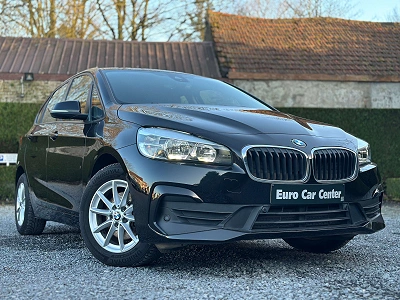
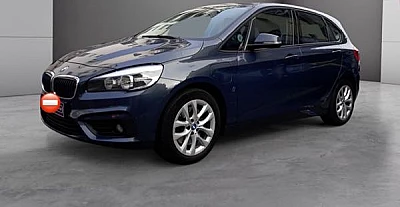
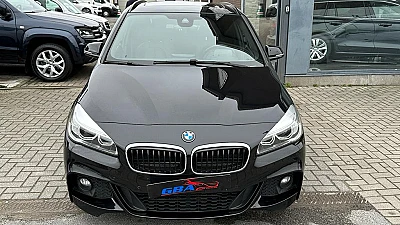
Of the 166 used BMW Serie 2 listed right now: 46% are diesel. 70% have automatic transmission. Half are priced under €20,000.
Listings come from both private sellers and dealers, with the mileage, year and engine shown on each one, so you can easily find an SUV that matches your budget and your needs. Every listing shows the year, engine, power, mileage, transmission and price, along with where the vehicle is and whether the seller is a private individual or a dealer. From there you can narrow the selection further, or widen it to the neighbouring categories below.
The confusion is common but the distinction is simple. A 4x4 has four driven wheels and a transmission built for traction on difficult ground. An SUV borrows mainly the silhouette and the ride height: most models sold today drive only two wheels.
For road and town use that difference barely matters – a two-wheel-drive SUV uses less fuel, costs less to maintain and drives like a raised saloon. Four-wheel drive earns its keep if you regularly face mountain roads, snow or unsurfaced tracks.
Before deciding, check each listing: the number of driven wheels is stated, and it separates two cars that look identical in a photograph but are not in use.
An SUV's size and weight weigh on consumption, which makes the engine choice more consequential than on a city car.
Diesel keeps its advantage over long distances: at steady speed the gap against an equivalent petrol is real. It makes sense from a high annual mileage upwards, provided you check the particulate filter's service history – it copes badly with repeated short trips.
Petrol suits most drivers who cover modest distances or drive mainly in town. Small turbocharged engines have largely replaced naturally aspirated ones and strike a reasonable balance between drivability and running cost, usually at a lower purchase price than a comparable diesel.
Hybrids have taken hold on this segment precisely because SUVs gain the most from them: braking energy recovery offsets part of the weight in town. A plug-in hybrid goes further on short daily trips, but only if you can charge regularly – without that you are carrying a battery for nothing.
Electric has become a credible option in this format, manufacturers having favoured tall bodies to house the batteries. Real-world range depends heavily on speed and temperature: a winter motorway run is the worst case.
Automatics are far more common on SUVs than across the market as a whole, and they are standard on almost every hybrid and electric. They make a real difference in traffic and on long journeys.
A manual remains cheaper to buy and to maintain, and is still well represented on entry and mid-range petrol and diesel models. If budget is the deciding factor, that is usually where the opportunities are.
This is what sells the segment. The height clears your view, makes getting in easier – which matters for fitting a child seat or for older passengers – and frees up more load space than a saloon of the same length.
The differences between models are large, though. A compact SUV is a raised city car and parks without difficulty; a seven-seat family model needs a parking space to match. Compare exterior dimensions as much as quoted boot volume.
On equipment, driver aids have become widespread across generations: autonomous emergency braking, adaptive cruise control, lane keeping, reversing camera. Whether a car has them depends more on its year and trim level than on the model.
Weight and size work some components harder than elsewhere. Tyres are wider and dearer and wear faster: a full set is a cost to fold into the purchase price. Brakes and suspension components deserve the same attention.
On a four-wheel-drive model, servicing of the transfer case and differentials should appear in the book. On a hybrid or an electric, the battery's history is the deciding factor, and mileage alone does not tell you.
Finally, an SUV that has genuinely been off-road leaves traces: underbody, skid plates and sills are the first places to look.
Start from your journeys rather than the model. Mainly urban use points to a compact petrol or hybrid SUV; regular long distances to a diesel or a larger hybrid; family needs to a five- or seven-seater with a generous boot; genuinely mixed use to four-wheel drive.
The links below let you narrow directly by body type, engine, gearbox or budget, and find the SUVs of a particular make.