Filter

Most used filters
€
€
Min.
max.
To
Country
Interior & Exterior
Min.
max.
Seller & warranty
Months
Performance
To
Looking for a used car with an automatic transmission? We currently have 8,126 listings on the site. More comfortable in town and on the motorway, the automatic gearbox is winning over more and more buyers.
Automatics now account for a growing share of the market. The rise of hybrids and electrics, where they are standard, has accelerated that – to the point where they are the norm on several segments.
On the used market this means wide but very varied supply: four different technologies hide behind one word, with quite different behaviour, servicing costs and durability. That is the main thing to understand before buying.
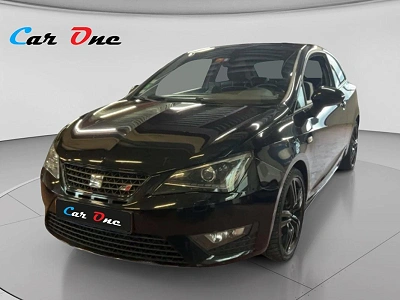
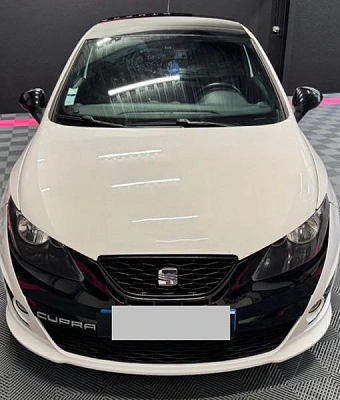
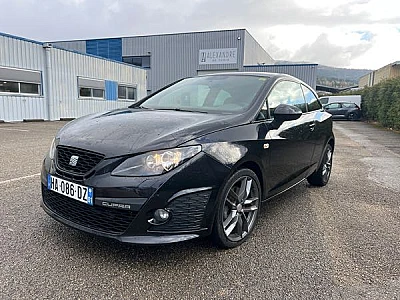
Of the 84 used Seat Ibiza listed right now: 54% are petrol. 96% have manual transmission. Half are priced under €10,000.
Listings come from both private sellers and dealers, with the mileage, year and engine shown on each one, so you can easily find a car with an automatic transmission that matches your budget and your needs. Every listing shows the year, engine, power, mileage, transmission and price, along with where the vehicle is and whether the seller is a private individual or a dealer. From there you can narrow the selection further, or widen it to the neighbouring categories below.
The torque-converter automatic is the oldest and the smoothest. It handles torque well, suits heavy vehicles and towing, and is generally robust. In exchange it is heavy and uses slightly more fuel.
The dual-clutch gearbox shifts very quickly and without interrupting torque. It is the most rewarding on open roads but the most stressed in town: repeated manoeuvring and heavy traffic wear the clutches and the mechatronic unit, both expensive repairs.
The CVT has no fixed ratios. It is very smooth in traffic and efficient, but flares the engine under acceleration in a way some drivers dislike. A test drive is essential.
The single-clutch automated manual is a manual gearbox with automated shifts, found mainly on older small cars. Its jerky operation is the most common complaint on the segment: try it before committing.
The listing often states the exact type. Where it does not, the engine and the segment give a good indication.
The gain is largest where you change gear most: dense traffic, urban commutes, long queues. Comfort there is in a different league from a manual.
On long motorway runs the gap narrows: a manual sits in top gear and the automatic adds little beyond managing slowdowns.
It also makes driving easier for anyone with physical constraints, and is required for towing in some configurations. On a heavy vehicle, torque always available changes how it pulls away on a hill.
The idea that automatics use more fuel no longer holds on recent generations. Gearboxes with seven, eight or more ratios keep the engine in its efficient range better than the average driver, and the gap has reversed on many models.
The extra cost is elsewhere: an automatic version generally sells for more than the equivalent manual at the same age and mileage. Part of that returns at resale, demand also being stronger.
Servicing is the real thing to plan for. Many manufacturers specify a gearbox oil change at intervals, and skipping it is among the most common causes of failure. The invoice should be in the book.
The drive matters more here than on a manual, and it should be done cold and then warm, in town and on the open road.
From cold, the first shifts should be clean and free of shunt. A marked delay engaging reverse or drive, jolts through the lower gears, or perceptible slip under acceleration are all signals to take seriously.
On a dual-clutch, pay attention during slow manoeuvres – parking, hill starts – where faults appear first. On a CVT, listen to how the engine behaves under firm acceleration.
Finally, check there is no engine or transmission warning at the instrument panel, including one that flashes briefly at start-up, and ask for the gearbox service history.
If your use is mainly urban or suburban, an automatic changes daily life and justifies its premium. If you drive mostly on open roads, or if purchase price is the deciding factor, a manual remains cheaper to buy and to maintain.
On a hybrid or an electric the question does not arise: the transmission is automatic by construction.
The links below let you narrow by body type, engine or budget.